Expect the structure to respond
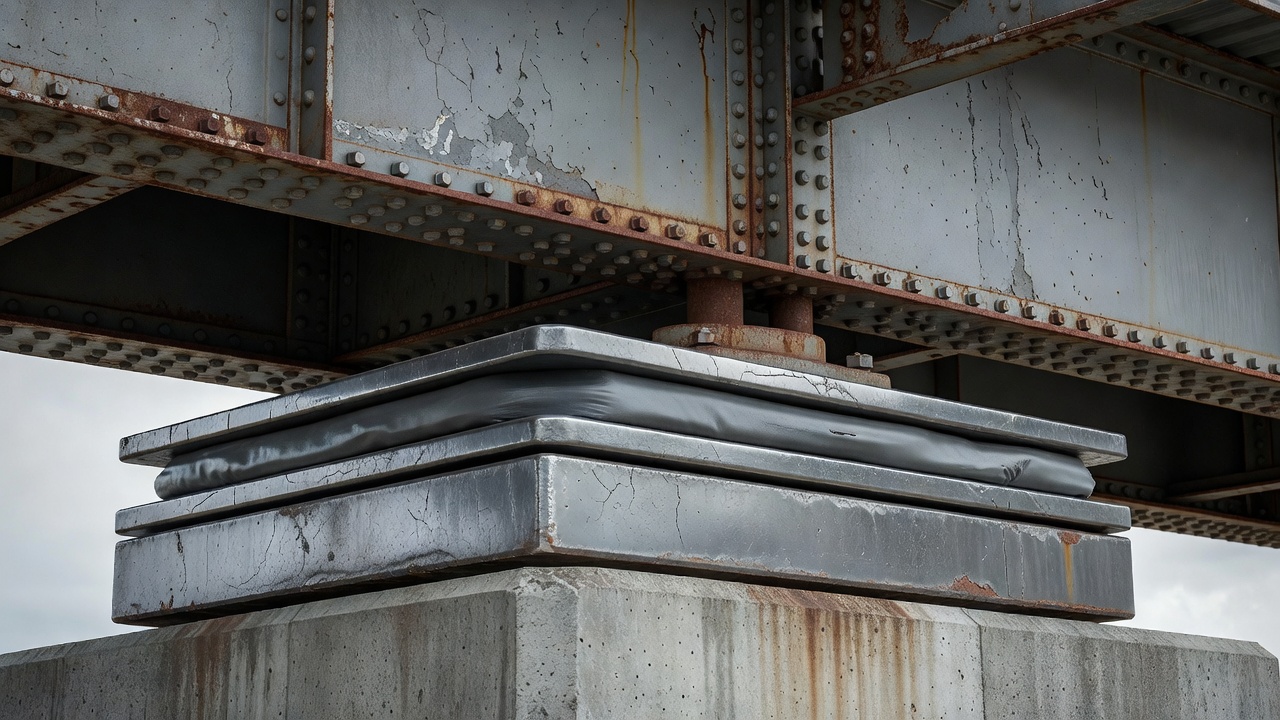
Bridges move as they carry loads and exchange heat with their surroundings. Expansion, contraction and changing restraint can influence measured displacement, strain and vibration. A response that looks unusual against yesterday's readings may be entirely ordinary for a different temperature or traffic pattern. Comparing measurements without that context can turn predictable variation into a stream of misleading alerts.
Temperature is especially easy to oversimplify. Air temperature does not immediately describe the temperature inside a concrete member. Sunlight can warm one side of a deck more than another, and a structure's response can lag behind changes in the weather. The relationship may be nonlinear or depend on whether the bridge is warming or cooling. A single straight-line correction should therefore be tested, not assumed adequate.
Traffic is similarly variable. Vehicle weights, speeds, lane positions and congestion change both excitation and response. Wind, rainfall, river conditions and maintenance operations may also matter, depending on the asset. The purpose of contextual data is not to explain every fluctuation away. It is to distinguish plausible operating effects from changes that deserve closer investigation.
Document the starting condition
A training dataset is not automatically a healthy dataset. Existing deterioration, installation faults or unusual restrictions may already be present when monitoring starts. Inspection findings, known defects, repairs and operational arrangements should be recorded alongside the selected reference period. The correct claim is often “representative of these observed conditions,” rather than “representative of a sound bridge.”
There is no universal minimum baseline duration. A short campaign may answer a tightly bounded question while missing seasonal extremes. A longer record can capture a wider range of conditions but may also span changes in sensors, surfacing or maintenance. The decision should follow the intended use, the variability that matters and the consequences of an incomplete reference.
The Z24 Bridge in Switzerland is a widely discussed research example because its monitoring record supports investigation of environmental effects and structural change. It is valuable as a research benchmark, not a ready-made model for a different bridge. The Tamar Bridge and Great Belt Bridge likewise illustrate why span arrangement, exposure and operational context cannot be treated as interchangeable background details.
Illustrative baseline note
No measured dataset is presented here. A real baseline record should identify its dates, included conditions, excluded periods, known asset condition and unresolved coverage gaps. A plotted confidence band should also explain how it was calculated.
Test relationships outside the training window
Simple regression, principal component analysis and more complex machine-learning methods can all represent relationships between response and operating conditions. Method names do not establish fitness for purpose. Begin with an interpretable comparison where possible, then ask whether additional complexity improves performance on data the model did not use for fitting.
Time-series validation needs particular care. Randomly mixing neighbouring observations across training and test sets can leak nearly identical conditions into both groups and exaggerate performance. Chronological holdouts and checks across different operating regimes are often more informative. Preprocessing parameters must also be estimated from the training portion rather than from the entire record.
Inspect the residuals: the differences between predicted and observed response. If they still track temperature, traffic or time of day, the model may be missing an important influence. Prediction intervals should be checked against observed coverage. A narrow interval is not inherently better if it systematically understates uncertainty. Conditions outside the training experience should be identified explicitly rather than silently treated as familiar.
Change the baseline with a record, not a reflex
A repaired joint, replaced sensor or altered traffic arrangement can justify reconsidering a baseline. Continuous automatic retraining, however, can absorb gradual deterioration into an expanding definition of normal. The monitoring team should specify what prompts review, who approves a new model and which historical version remains available for comparison.
ISO 2394 provides general principles on reliability for structures, while EN 1990 provides the basis of structural design within the Eurocodes. Neither is a shortcut for selecting an anomaly threshold. ISO 13822 addresses assessment of existing structures and helps place monitoring evidence within a broader assessment context. Applicable national provisions and asset-owner requirements still need attention.
The practical output is a controlled reference: data provenance, environmental coverage, model assumptions, validation evidence and known limitations. With that record in place, a departure becomes a better-defined question. It may reflect an unfamiliar operating condition, an instrument problem or a structural change. The next guide examines how to investigate that departure without converting it prematurely into a diagnosis.